
Revit Services
Revit Services & BIM Modeling Support
PMO Construction provides Revit Services, BIM Services, BIM Modeling, Autodesk Revit documentation and BIM Coordination support for project teams that need clearer drawings, coordinated models, shop drawings and digital construction information.
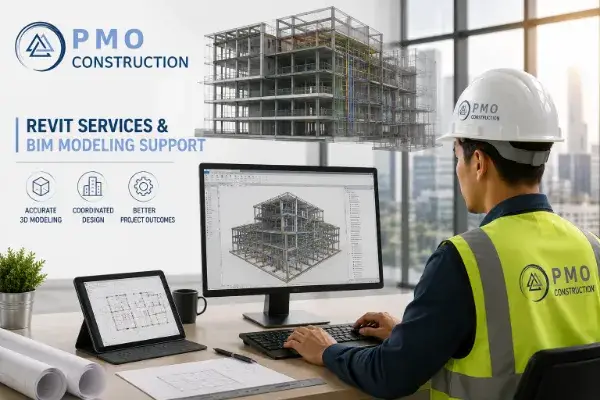
Digital Engineering Support for Better Construction Clarity
Revit Services help project teams create clearer, more coordinated and more useful construction information. Traditional 2D drawings remain important, but modern projects increasingly require intelligent models, coordinated drawings, better visualization and structured documentation.
PMO Construction supports architects, engineers, consultants, contractors and developers with Autodesk Revit-based modeling and documentation services. Our goal is to help project stakeholders reduce drawing confusion, improve coordination and support better decision-making before and during construction.
BIM Services can support multiple project stages, from early concept modeling and design coordination to shop drawings, quantity extraction, clash review and as-built model support. When digital information is organized properly, project teams can work with more confidence and fewer assumptions.
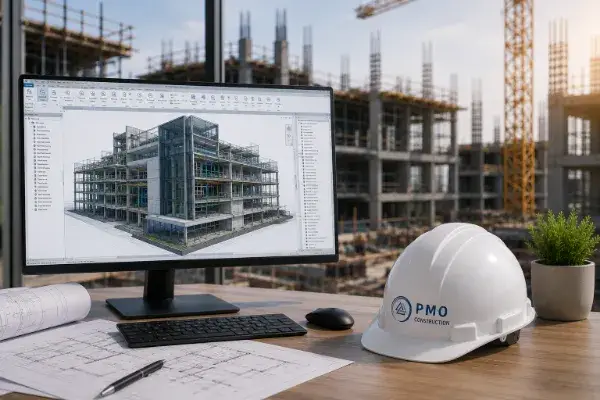
What Autodesk Revit Brings to Construction Projects
Autodesk Revit is widely used for building information modeling because it allows project teams to create intelligent 3D models connected with drawings, schedules and project data. Instead of treating drawings as separate files, model-based workflows help connect design elements into a more coordinated project environment.
A Revit model can support architectural planning, structural coordination, MEP routing, quantities, sections, elevations, schedules and documentation. This makes it useful not only for design teams but also for contractors, project managers and clients who need better visibility of the project.
- Better visualization: see design intent more clearly before execution.
- Better coordination: identify conflicts between disciplines earlier.
- Better documentation: generate drawings, sections and schedules from model information.
From concept model to construction documentation
Project Review
We review drawings, scope, design intent, model requirements, required deliverables and coordination priorities.
Model Setup
Autodesk Revit files are organized with appropriate levels, grids, views, sheets, naming and project structure.
BIM Modeling
Model elements are developed according to project requirements for architecture, structure, MEP or coordination purposes.
Coordination
Model information is reviewed to identify gaps, drawing conflicts, interface issues and discipline coordination concerns.
Documentation
Drawings, sheets, details, schedules and model views are prepared to support design, tender or construction requirements.
Delivery
Final files, drawings or model deliverables are issued for review, construction support, coordination or record purposes.
BIM Services That Improve Coordination Before Site Problems Appear
BIM Services help construction stakeholders identify design and coordination issues before they become site problems. When architecture, structure and MEP information is not coordinated properly, the result can be clashes, rework, delays and unnecessary cost.
A model-based workflow allows project teams to review information visually and technically. This does not replace professional judgment, but it creates a stronger environment for coordination, communication and construction documentation.
Revit and BIM Services We Provide
Architectural Revit Modeling
Modeling support for walls, doors, windows, rooms, elevations, sections, schedules and architectural documentation.
Structural BIM Modeling
Support for structural elements including slabs, beams, columns, foundations, framing and coordination drawings.
MEP BIM Support
Modeling and coordination support for mechanical, electrical, plumbing and fire protection interfaces.
BIM Coordination
Coordination support between disciplines to reduce conflicts and improve construction readiness.
Shop Drawings
Construction-ready documentation, sections, details and coordinated drawing outputs for project execution.
As-Built Models
Model updates based on completed work, site changes and final project documentation requirements.
Quantity Extraction
Support for extracting quantities and schedules from model information where the model is prepared appropriately.
Revit Drafting
Professional drafting support for drawings, sheets, details, annotations and technical presentation.
A clearer information path for project teams
Digital coordination is most valuable when every stakeholder understands how information moves. A model should not be created only for presentation. It should support design review, technical coordination, documentation, site execution and future updates.
PMO Construction organizes model-based work so project teams can see what has been developed, what needs review and what is ready for issue.
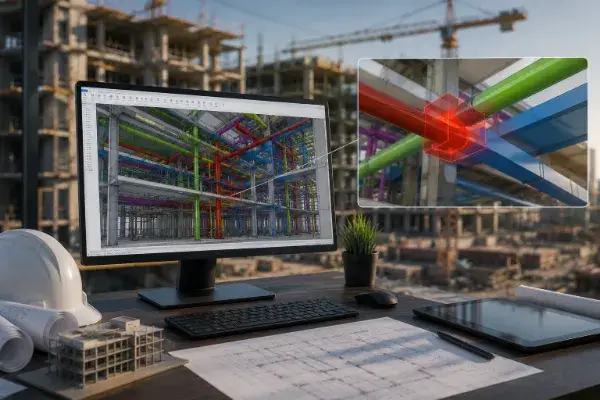
Reducing Design Clashes Before They Reach the Site
BIM Coordination helps project teams identify conflicts between architectural, structural and MEP information before work reaches execution. Many site problems begin because different drawings do not align, services clash with structural elements or design changes are not updated across all disciplines.
A coordinated model gives engineers, consultants and contractors a clearer way to review interfaces before they create cost, delay or rework. PMO Construction supports coordination by helping organize model information, review discipline interfaces and highlight areas that need attention.
Without BIM Coordination vs With Coordinated Modeling
Without Coordination
Design conflicts may only become visible during site execution. This can lead to rework, delayed approvals, redesign, material waste and disputes between contractors, consultants and specialist teams.
With Coordinated Modeling
Conflicts can be reviewed earlier through model-based workflows, allowing teams to resolve issues before they become expensive site problems.
BIM Modeling Levels and Project Requirements
BIM Modeling should match the purpose of the project. A model created for concept visualization does not need the same detail as a model used for shop drawings, construction coordination or as-built records. The level of information should be defined according to the client’s needs, project stage and intended use.
PMO Construction helps clients and project teams understand what level of model development is suitable for their work. This prevents unnecessary modeling effort while ensuring the model contains enough information to support coordination, documentation or construction review.
Concept Model
Useful for early visualization, massing, space planning and design discussions.
Design Model
Supports architectural, structural and MEP design coordination with more developed project information.
Construction Model
Supports shop drawings, construction documentation, technical coordination and site execution planning.
As-Built Model
Records completed project information for handover, future renovation, maintenance or facility management.
Revit Drafting, Shop Drawings and Technical Documentation
A model becomes more valuable when it supports clear and accurate documentation. Revit drafting can be used to create plans, elevations, sections, schedules, details and sheet layouts that help teams communicate technical information more effectively.
Shop drawings and coordinated documentation are important because contractors need clear information for execution. When drawing information is incomplete or poorly coordinated, the site team may rely on assumptions, leading to mistakes and delays.
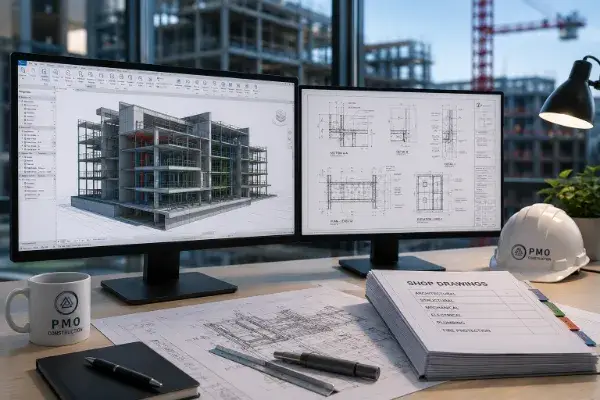
Supporting Better Collaboration Throughout the Project Lifecycle
Modern construction projects involve architects, structural engineers, MEP consultants, contractors, suppliers and owners working together throughout design and execution. Digital engineering workflows help organize project information so each participant can work from clearer documentation.
PMO Construction supports collaborative delivery by helping organize model information in a structured and practical way. Instead of relying only on separate drawing files, project teams can use coordinated digital information that improves visualization, documentation and communication.
Digital Models Continue to Deliver Value After Construction
The value of organized digital information often extends beyond project completion. Building owners, facility managers and maintenance teams can benefit from structured documentation when planning renovations, maintenance activities or future modifications.
PMO Construction believes digital engineering should support practical outcomes rather than simply producing attractive 3D models. Every project should deliver information that improves communication, strengthens coordination and provides lasting value for clients after site work has finished.
Projects That Benefit From Revit and BIM Support
Commercial Buildings
Offices, malls, retail spaces and mixed-use buildings often involve multiple disciplines and benefit from clearer coordination.
Healthcare Projects
Hospitals and clinics require careful coordination between architecture, structure, MEP services, equipment layouts and operational requirements.
Industrial Facilities
Plants, warehouses and production facilities need organized model information for structure, equipment foundations, services and heavy-duty elements.
Residential Developments
Villas, apartments and housing projects can use digital modeling for design review, drawings, quantities and coordination.
Model-Based Workflows Supported by Industry Resources
BIM and digital construction workflows are widely supported by industry platforms and professional guidance. Project teams often refer to Autodesk BIM resources for model-based coordination, while project delivery principles from the Project Management Institute support structured planning, documentation and project control.
For broader digital built environment guidance, organizations such as buildingSMART International promote open standards and information management concepts that support better collaboration between project stakeholders.
Connecting Design, Engineering and Construction Through Digital Workflows
Construction projects involve far more than producing technical drawings. Architects, structural engineers, MEP consultants, contractors and project owners all contribute information throughout the project lifecycle. When this information is disconnected, teams spend valuable time resolving misunderstandings, reviewing outdated drawings and correcting avoidable coordination issues. A structured digital workflow helps ensure that project information remains organized, consistent and accessible to everyone involved.
PMO Construction supports integrated project delivery by helping clients organize technical information in a way that improves collaboration between disciplines. Instead of treating architectural, structural and building services information as separate documents, coordinated digital models allow project teams to understand how each discipline interacts with the others. This creates greater confidence during planning, procurement and construction.
Well-managed digital information also improves communication with project stakeholders. Owners gain a clearer understanding of design intent, consultants can review coordinated documentation more efficiently and contractors receive information that is easier to interpret before work begins on site. Better communication reduces uncertainty and allows technical discussions to focus on practical solutions rather than resolving drawing inconsistencies.
As projects become larger and more technically demanding, the ability to organize information effectively becomes increasingly important. Digital engineering workflows support better planning, improved documentation and stronger coordination throughout the project lifecycle.
Accurate Technical Documentation Supports Better Project Decisions
Every successful construction project depends on reliable technical documentation. Plans, elevations, sections, schedules, details and coordinated layouts provide the information needed by consultants, contractors and site teams to carry out their responsibilities efficiently. When documentation is incomplete or inconsistent, project teams may rely on assumptions that increase the likelihood of delays, rework and additional costs.
PMO Construction prepares organized documentation that supports both design development and construction activities. Whether the requirement involves architectural layouts, structural information, coordinated service drawings or presentation documents, our objective is to produce information that is technically clear, professionally organized and practical for project delivery.
Well-prepared documentation also improves revision management. As projects evolve, design updates can be incorporated into coordinated project information, helping teams maintain consistency throughout the design and construction process. This reduces confusion and provides greater confidence that the latest approved information is available when decisions are made.
Clear documentation benefits every stakeholder by improving communication, supporting technical reviews and creating a stronger foundation for successful construction.
Creating Digital Information That Continues to Deliver Value
The benefits of organized digital project information continue long after construction has been completed. Building owners frequently require accurate records when planning maintenance activities, future renovations or facility upgrades. Having reliable project documentation available reduces the time required to investigate existing conditions and improves confidence when making future investment decisions.
Well-organized digital records also support facility management by providing easier access to construction information, equipment locations and project documentation. Rather than searching through multiple drawing revisions, owners and maintenance teams can work from structured information that reflects the completed project.
PMO Construction believes digital engineering should provide lasting value rather than simply producing attractive visual models. Every project should deliver information that supports better communication, improves technical understanding and creates practical benefits throughout the operational life of the building.
By focusing on quality documentation, effective coordination and practical project support, we help clients develop information that remains useful long after construction activities have finished.
Revit Services FAQs
What are Revit Services?
Revit Services include Autodesk Revit modeling, drafting, documentation, BIM Modeling, drawing updates, shop drawings, schedules and model-based coordination support for construction projects.
What is the difference between Revit and BIM?
Autodesk Revit is software used to create building models, while BIM is the wider process of using digital building information for design, coordination, documentation and project decision-making.
Do you provide BIM Services?
Yes. PMO Construction provides BIM Services including model development, coordination support, shop drawings, clash review support, quantity extraction and as-built model updates.
Can you create BIM Modeling from 2D drawings?
Yes. Where proper 2D drawings are available, a BIM model can be developed to support visualization, coordination, documentation or construction planning.
Can Revit help with quantity extraction?
Yes, when the model is structured correctly. Quantity schedules can support estimation, BOQ review and commercial planning, although each model must be checked for accuracy and scope.
Do you provide shop drawings?
Yes. PMO Construction can support Revit-based shop drawings, construction documentation, drawing updates and coordinated technical drawings for project teams.
Can you help with as-built models?
Yes. As-built models can be prepared or updated based on final drawings, site information and project handover requirements.
Who needs BIM Coordination?
BIM Coordination is useful for owners, consultants, architects, engineers, contractors and project managers working on buildings with multiple disciplines or complex service interfaces.
Need Professional Revit and BIM Support?
Whether you need Revit Services, BIM Services, BIM Modeling, Autodesk Revit drafting or BIM Coordination support, PMO Construction can help organize your project information into clearer digital construction documentation.